Audience and Market research
As part of our media research, we must produce some form of market research to discover the audience of our genre; horror.
What is market research?
Market research is a planned attempt to gain information, opinions and views a current product, market or to develop an image of the consumer for a product, with additional point to gather feedback or ideas from the audience of a product. Companies or Individual often interpret their research about an individual consumer or organisation or product through numerical, statistical and analytical methods to discover their particular interest.
Some things which can be considered in market research are market trends, customer analysis, choice modelling, competitor analysis, risk analysis, product research, and advertisement.
Why do we need to apply it to our film?
Film production and distribution integrate various methods of market research and targeting audiences. Some companies which work the UK are the “All Industry film Industry”, “The British Academy of Film & Television Arts”, “The British Film Institute”, “The British Video Association”, “The Cinema Advertising Association”, “The Cinema Exhibitors' Association”,” The Film Distributors' Association” and the “The UK Film Council”.
Audience
When we are planning our film, it was important to consider the audience. If our product didn’t have an audience, it would be useless to continue. Our research is crucial, questionnaires, comparisons with existing products and focus groups are the are all used to target the audience. Producers want to discover their focus groups, which are basically clarified by;
• income bracket/status
• age
• gender
• race
• location
As horror films are an established genre, they clearly already had an audience. As a result my initial step was to research online for the demographic of horror films, I found two tables from http://www.valmorgan.com.au/au/audiences/profiles/horror-movies/
Chart One
The first chart demonstrates the ages of the horror movie audience. It demonstrates that although the 50+ age group makes up most of the general population, they only make up 3 percent of the horror genre audience, while the 35-49 age group also make a big 27 percent of the general population however make a miniscule 6 percent of the horror film audience. The graph does demonstrate however that the horror film drama is hugely popular with the under 25 age group with them making up a 72 percent share of the audience. Although it is a restrictive audience as it only makes up 19 percent of the total general population, which is further restricted through restriction of film through certification. By conclusion, the horror film genre is is very popular with the under 25 age group, particularly the 18-24 age group.
Chart Two
The second genre demonstrates the gender demographic of horror film. It demonstrates that a massive 61 percent of males make up the horror movie audience compared to only 39 percent of females. In conclusion, the male under 25 demographic are our main target audience and our focus group.
How can we conduct our own research?
Interviews
The primary purpose of interviewing is gain personal and precise information from the person we interview. It is a form of surveying, asking a set sequence of questions for every person to be interviewed. Although we would be interviewing individuals, the aim is to produce an overall picture of a group of people and their interests or personal judgments.
As part of the interviewing process I produced this series of questions;
1. What is your age?
2. What is Your Gender?
3. Do you have an interest in horror films?
4. If so or If not, Why?
5. What specific type of horror films do you like? (Psychological Horror, slasher, supernatural, science fiction, fantasy, other)
6. What particular elements of horror films can you find inappropriate? (Graphic violence etcetera)
7. What conventional parts of the horror do you expect?
8. Does casting influence what film you watch?
9. What is your favorite Horror film?
10. What is your least favorite horror film?
11. Would certification influence what films you watch?
12. Where do you watch horror films?
13. What is the main reason you watch horror films?
14. Is horror you favorite genre?
15. In a film opening, what keeps you interested in the narrative?
16. What do you find most frightening in a horror film? (music, special effects etcetera)
17. What do you like to see in a horror film?
18. What do you dislike seeing in a horror film?
19. Would you prefer explained horror, or psychological horror?
20. What do you expect in a horror film?
Results
We interviewed 15 people, and I constructed several tables of our results;
1) Age
Age 16-21 22-27 28-33 34-39 40-45 46-51 52+
Number of people 8 1 1 1 2 2 0
2) Gender
Gender Male Female
Number 5 10
3) Do you have an interest in horror films?
Yes Non
Number 10 5
4) If so or If not, Why?
Why do you like? Scary Interesting suspense thrilling escapism exciting dramatic
Numbers 10 1 2 2 0 0 0
Nobody answered that they disliked horror films.
5) What specific type of horror films do you like?
What specific type of horror films do you like? Psychological Slasher Supernatural Science fiction Fantasy thriller gothic Other
3 4 2 1 0 5 0 0
6) What particular elements of horror films can you find inappropriate? (Graphic violence etcetera)
What is inappropriate? Gore Sexual themes Graphic violence Nothing
1 3 1 10
7) What conventional parts of the horror do you expect?
Conventions Murder Creatures Criminals Blood Violence Fear Eerie Settings Gore Darkness
4 2 1 2 2 1 1 1 1
8) Does casting influence what film you watch?
Casting Yes No
6 9
9) What is your favorite Horror film?
Film Alien The Exorcist Halloween Friday 13th Psycho The Texas chainsaw massacre Final Destination The Hills have eyes Dawn of the Dead
2 2 3 1 1 2 2 1 1
10)
Fieldwork
Fieldwork consists of face-to-face fieldwork and telephone interviews. Our main form of fieldwork was the facet-to-face interview due to the practicality of doing on location with numerous people, and some people may find telephone interviews patronizing or pointless, moreover there is no visual interaction between us and the person receiving the interview.
Interviewing in public places
We conducted all of our interviews in a public places, apart from a few private interviews. This was much easier than private interviews, as we could conduct these interviews in college where one of our focus groups is most prominent.
However, the main issue with this was we were only receiving limited feedback as on college grounds a majority of individual are aged 16-20, which removes the variety and broad spectrum of people who can give us wider feedback.
Moreover, there is a distinct gender gap with he people we interviewed, a majority were female which meant we were not catering for our under 25, male audience which we meant to target.
Overall, I don’t believe we captured a broad spectrum of genders and ages for our audience research, in future project, we need a much bigger sample of people, preferably targeting out intended audience.
How did we prepare for the interviews?
Workspace
We conducted all our interviews in the classroom, apart from a few others conducted at home. It was important to interview people as individuals, as their opinions, views or decisions could be influenced by others if interviews were conducted together, which would have altered our interview. It was also difficult for people to spend time doing our survey as people in the classroom inevitably had work to do, rushing the survey and may have affected certain results.
Interviewers' preparation
Before we interviewed, we firstly had to indentify a rough focus group to interview, which was our age group, meaning that interviewing class member would be the focus group of our interview.
1. Planning the questionnaire
What did we need to do?
Although it was tempting to produce a questionarrie quickly and with little consideration it was important that we gathered a more clear, targeted questionnaire. I achieved this by firstly research the demographic of horror film (seen above) with additional research into other interviews regarding horror movie audiences. It was important as we could possible exclude crucial questions which should have been in our interview, also we could have interviewed a completely incorrect audience, meaning our results would have missed our target audience completely. Moreover, it was important to make sure our questions were not biased and that people gave accurate results, which is something that in the drafting process recognized that some of the questions did have a bias, which would have distorted our results.
How did we set up our questionnaire?
We had various choices to make, whether we wanted to do spoken or written interviews. Both have benefits, written surveys for example have a smaller sense of urgency meaning people will take longer when answering the questions and possibly resulting in more genuine marks, whereas spoken surveys have a large sense of urgency and tend to be rushed, producing inaccurate results.
How long would we make our questionnaire?
As we had reasonably small sample, it wasn’t necessary to make the survey particularly long, moreover most people didn’t have the time for a extended lengthy interview, so a small set of questions lasting around 5-10 minutes was chosen in favour.
Results and trends
Contrary to our researched graphs, all the females interviewed watched horror films and had an interest in them; however none of the males claimed to have an interest in the genre. Most people enjoyed the thriller genre the most, with almost equally large group enjoying the slasher sub-genre.
Various conventions were mentioned on a broad spectrum, only five felt that there was inappropriate themes in horror films and most of those who specified inappropriate content were 22+ females.
Thursday, 25 February 2010

Health and Saftey
Health and Safety
As part of my film production, I must contemplate health and safety along with risk assessment in film production. Normally under health and safety, the final liability for health and safety is bestowed on the employer concerned in planning the premises and locations. In film production this could be anyone from the producer to the suppliers, meaning health and safety is a crucial consideration.
On an everyday foundation, the producer or producers have overall liability for guarantying and maintaining the definite standards of health and safety. This means that I must ensure that considerations into health and safety and risk assessment are made. This will be done through planning and communication between group members, cast and producers.
In film production, health and safety places a huge financial risk to the production company (through suing and legal punishment) if someone is injured, which means it is a generic, but important business consideration.
What is risk assessment?
Rick assessment is the cautious assessment of the ways people could come to harm, and how they can occur. It is our task to consider and evaluate control and defensive methods which would reduce or remove the harm to any individuals. It is my task to establish several considerable risks included with the production of the film, and whether adequate precautions have been used to reduce all dangers.
An example of a hazard is a thing we can be considered a danger for example broken glass, electricity and high ledges.
Risk is usually considered and classified into three levels of risk: low, medium and high.
How will I evaluate risk assessment?
It will be my task to go to the location and evaluate the risks, and I have set up various steps I will follow to evaluate the risk.
1. Firstly I will look for hazards: I will look at the major hazards and dangers I can find which can cause considerable danger of injury, without analyzing insignificant risks of harm.
2. Secondly I must decide which person is most at risk and how they are at risk. Here I must look at the individuals who are at particular risk and who are affected by the risks.
3. Thirdly I must evaluate the risk. This is where I will consider the risk of which the harm would result in. I will have to judge the severity of the risk and propose the required control measures through; avoiding the risk completely and altering production requirements to meet health and safety; reduce the risk to acceptable standard through training, protective equipment and safety precautions or removing the source of risk completely.
4. Fourthly, it will be my task to record any important conclusions. For example, any crucial findings should be confirmed and specified to the individual or group affected so the necessary precautions can be taken. In action, this requires me to inform any actors, production team or anyone people on set of any risks. I also must be conscious of these risks myself as I will be filming. Moreover I feel it will be important to keep a register of risks on location to remind us of the issues we could be facing.
5. Lastly, I will have to re-examine and modify the risk assessment register. For example, new risks must be modified for any alterations in action, equipment or requirements.
As part of my film production, I must contemplate health and safety along with risk assessment in film production. Normally under health and safety, the final liability for health and safety is bestowed on the employer concerned in planning the premises and locations. In film production this could be anyone from the producer to the suppliers, meaning health and safety is a crucial consideration.
On an everyday foundation, the producer or producers have overall liability for guarantying and maintaining the definite standards of health and safety. This means that I must ensure that considerations into health and safety and risk assessment are made. This will be done through planning and communication between group members, cast and producers.
In film production, health and safety places a huge financial risk to the production company (through suing and legal punishment) if someone is injured, which means it is a generic, but important business consideration.
What is risk assessment?
Rick assessment is the cautious assessment of the ways people could come to harm, and how they can occur. It is our task to consider and evaluate control and defensive methods which would reduce or remove the harm to any individuals. It is my task to establish several considerable risks included with the production of the film, and whether adequate precautions have been used to reduce all dangers.
An example of a hazard is a thing we can be considered a danger for example broken glass, electricity and high ledges.
Risk is usually considered and classified into three levels of risk: low, medium and high.
How will I evaluate risk assessment?
It will be my task to go to the location and evaluate the risks, and I have set up various steps I will follow to evaluate the risk.
1. Firstly I will look for hazards: I will look at the major hazards and dangers I can find which can cause considerable danger of injury, without analyzing insignificant risks of harm.
2. Secondly I must decide which person is most at risk and how they are at risk. Here I must look at the individuals who are at particular risk and who are affected by the risks.
3. Thirdly I must evaluate the risk. This is where I will consider the risk of which the harm would result in. I will have to judge the severity of the risk and propose the required control measures through; avoiding the risk completely and altering production requirements to meet health and safety; reduce the risk to acceptable standard through training, protective equipment and safety precautions or removing the source of risk completely.
4. Fourthly, it will be my task to record any important conclusions. For example, any crucial findings should be confirmed and specified to the individual or group affected so the necessary precautions can be taken. In action, this requires me to inform any actors, production team or anyone people on set of any risks. I also must be conscious of these risks myself as I will be filming. Moreover I feel it will be important to keep a register of risks on location to remind us of the issues we could be facing.
5. Lastly, I will have to re-examine and modify the risk assessment register. For example, new risks must be modified for any alterations in action, equipment or requirements.
Sunday, 14 February 2010
What are Opening Credits?
As part of our film openings, we must integrate opening credits and a title sequence, but what are they?
What are the Opening Credits?
In films, the opening credits are integrated at the beginning and illustrate the crucial individuals associated with the production of the motion picture. Opening credits are normally illustrated with text, which is superimposed resting on a vacant a screen or still image, although occasionally they are utilized on moving action within the movie. Synchronous and asynchronous non-diegetic sound may be used, although it is not necessary. When the opening credits form an individual sequence of their own it is known as a title sequence.
Ordinary opening credits sequence.
Whereas there are big differences in general opening credits, they frequently incorporate some sort of alteration of the standard order depicted here:
“(NAME OF THE STUDIO)
- Name of the studio that is distributing the film and may or may not have produced it (Buena Vista, Columbia, Lions Gate, Universal, etc.)
(NAME OF THE PRODUCTION COMPANY)
- Name of the production company that actually made the film
- Name of the investment groups or companies that financed a substantial part of the film (usually credited as "in association with")
(PRODUCER NAME) PRODUCTION or/and (director only) A FILM BY (DIRECTOR or PRODUCER NAME)
- Director’s or producers first credit, often "a film by XY or "a XY film"
STARRING
- Principal actors, (Sometimes the stars' and director's credits will be reversed, depending on the star's deal with the studio)
(FILM'S TITLE)
- Name of the film
FEATURING
- featured actors
CASTING or CASTING BY
- casting director
MUSIC or MUSIC COMPOSED BY or ORIGINAL SCORE BY
- Composer of music
PRODUCTION DESIGN or PRODUCTION DESIGNER
- Production designer
(As a variation some of the below may be noted:
SET DESIGN
COSTUMES or COSTUMES BY or GAWNS (older movies)
HAIRDRESSER
MAKE-UP ARTIST
SOUND RECORDING (older movies)
VISUAL EFFECTS DIRECTOR or VISUAL EFFECTS BY)
EDITOR or EDITED BY
- Editor
DIRECTOR OF PHOTOGRAPHY
- Director of photography
PRODUCER or PRODUCED BY, EXECUTIVE PRODUCER
- Producers, co-producers, executive producers, 'also produced by' (credited for various reasons according to contracts and personal scrutiny of the principal producer)
BASED ON THE BOOK, (PLAY, GRAPHIC NOVEL etc.) BY or FROM A PLAY/BOOK BY (older movies)
- If based on a book or other literary work
Or
BASED ON THE CHARACTERS BY or BASED ON THE CHARACTERS CREATED BY
- If based on characters from a book or other media
STORY or STORY BY
- Person who wrote the story...
...on which the script is based, gets "story by" credit, and the first screenplay credit, unless the script made substantial changes to the story
WRITER(S) or WRITTEN BY
- Screenplay writers
The Writers Guild of America allows only three writing credits on a feature film, although teams of two are credited as one, separated on the credits by an ampersand ("X & Y".)
- If each works independently on the script (the most common system), they are separated by an "and"
- if more than two persons worked on the screenplay, the credits may read something like "screenplay by X & Y and Z and W" X and Y worked as a team, but Z and W worked separately.[3]
DIRECTED or DIRECTED BY
- Director”
Source:http://www.salon.com/entertainment/feature/1998/10/09feature.html
What is a Title Sequence?
The title sequence is the process by which cinematic movies exemplify their titles, key production and cast members, incorporating abstract visuals and audios. It typically follows opening credits, which are normally not anything more than a succession of superimposed text.
What are the Opening Credits?
In films, the opening credits are integrated at the beginning and illustrate the crucial individuals associated with the production of the motion picture. Opening credits are normally illustrated with text, which is superimposed resting on a vacant a screen or still image, although occasionally they are utilized on moving action within the movie. Synchronous and asynchronous non-diegetic sound may be used, although it is not necessary. When the opening credits form an individual sequence of their own it is known as a title sequence.
Ordinary opening credits sequence.
Whereas there are big differences in general opening credits, they frequently incorporate some sort of alteration of the standard order depicted here:
“(NAME OF THE STUDIO)
- Name of the studio that is distributing the film and may or may not have produced it (Buena Vista, Columbia, Lions Gate, Universal, etc.)
(NAME OF THE PRODUCTION COMPANY)
- Name of the production company that actually made the film
- Name of the investment groups or companies that financed a substantial part of the film (usually credited as "in association with")
(PRODUCER NAME) PRODUCTION or/and (director only) A FILM BY (DIRECTOR or PRODUCER NAME)
- Director’s or producers first credit, often "a film by XY or "a XY film"
STARRING
- Principal actors, (Sometimes the stars' and director's credits will be reversed, depending on the star's deal with the studio)
(FILM'S TITLE)
- Name of the film
FEATURING
- featured actors
CASTING or CASTING BY
- casting director
MUSIC or MUSIC COMPOSED BY or ORIGINAL SCORE BY
- Composer of music
PRODUCTION DESIGN or PRODUCTION DESIGNER
- Production designer
(As a variation some of the below may be noted:
SET DESIGN
COSTUMES or COSTUMES BY or GAWNS (older movies)
HAIRDRESSER
MAKE-UP ARTIST
SOUND RECORDING (older movies)
VISUAL EFFECTS DIRECTOR or VISUAL EFFECTS BY)
EDITOR or EDITED BY
- Editor
DIRECTOR OF PHOTOGRAPHY
- Director of photography
PRODUCER or PRODUCED BY, EXECUTIVE PRODUCER
- Producers, co-producers, executive producers, 'also produced by' (credited for various reasons according to contracts and personal scrutiny of the principal producer)
BASED ON THE BOOK, (PLAY, GRAPHIC NOVEL etc.) BY or FROM A PLAY/BOOK BY (older movies)
- If based on a book or other literary work
Or
BASED ON THE CHARACTERS BY or BASED ON THE CHARACTERS CREATED BY
- If based on characters from a book or other media
STORY or STORY BY
- Person who wrote the story...
...on which the script is based, gets "story by" credit, and the first screenplay credit, unless the script made substantial changes to the story
WRITER(S) or WRITTEN BY
- Screenplay writers
The Writers Guild of America allows only three writing credits on a feature film, although teams of two are credited as one, separated on the credits by an ampersand ("X & Y".)
- If each works independently on the script (the most common system), they are separated by an "and"
- if more than two persons worked on the screenplay, the credits may read something like "screenplay by X & Y and Z and W" X and Y worked as a team, but Z and W worked separately.[3]
DIRECTED or DIRECTED BY
- Director”
Source:http://www.salon.com/entertainment/feature/1998/10/09feature.html
What is a Title Sequence?
The title sequence is the process by which cinematic movies exemplify their titles, key production and cast members, incorporating abstract visuals and audios. It typically follows opening credits, which are normally not anything more than a succession of superimposed text.
Sound in Horror Films

Sound in Psycho
Something which I must consider is the use of sound in my film. Whether it is non-diegetic or diegetic. The music present in the film opening can be found here; http://www.youtube.com/watch?v=Tek8QmKRODw&feature=related
Soundtrack
The score for psycho was written by Bernard Herrmann. It is wildly excepted that most of the drama, tension, horror and fear within the film is created by the music within it, with Hitchcock commenting “33% of the effect of psycho was due to the music”, demonstrating the importance of sound in film.
However, the budget for music was relatively low. Causing Bernard Herrmann used to use a string orchestra, instead of a full symphonic ensemble. When analysed, the string instruments provide the score with a larger range of tone, special effects and dynamics than any other instrument could have. Although a string orchestra would be impossible incorporate with our limited budget, string music scores are available to download and it is a possibility we could integrate this into our film opening.
The music heard in the opening titles is undoubtedly a stressed, aggressive and vicious piece. The piece positions the atmosphere of imminent brutality, which reappears 3 times throughout the film. Although the initial opening scenes are relatively quiet, and do not contain the graphic violence later scene the music is firmly positioned in the audiences minds, creating an overwhelmingly dark atmosphere from the beginning of the film. The music is definitely a matter we should consider in our opening, whether they contain violence or not, the music can exemplify the character of the complete film and constructs the meaning and mood the director wishes to convey.
It is widely believed that Herrmann edited the bird screeches, amplifying them to increase the terror of the audio in the shower scene, despite the fact the shower scene was originally meant to be silent. Although the violin instrument purely achieved the effect. The only form of amplification was the use of microphones being located next to instruments, making them appear louder. However, with our editors amplification can be incorporated through audio editing, along with various other effects such as echo. This is something I will integrate into the film’s opening soundtrack.
Other classic horror Music
Orchestral music is a conventional feature of horror films, these conventions however have been challenged through asynchronous sounds for comical and shocking effect. However, the vibrant variety and continual possibilities of orchestral allows a composer to diversify music to certain events. Moreover it can easily convey emotion and is easily recognized by audiences.
Modern and Alternative Soundtracks
As mentioned however, horror movies continue to challenge the conventions of stereotypical orchestral soundtracks in horror films. The “Blair Witch 2” integrates a modern, alternative and industrial style synthesised soundtrack. The darkness and mystery generated by this genre of music can work brilliantly, creating more eerie feels to the horror film. Asynchronous music as mentioned can also be integrates; “American Psycho” incorporates 1980s style rock and pop, rather than producing a horrific feel, it creates a more disturbing and disconnecting emotion with the audience, which produces and audience feel for the criminal’s mindset. Asynchronous and synchronous are both features of horror films, however synchronous is considered a convention of horror, and in order to produce an eerie narrative and tone to the film opening, I believe synchronous music should be incorporated into our film opening.
Musical Cues
A musical cue is a lengthy string or horn build up to a moment of extreme action or violence. This cue is one of the many audio conventions of horror, the audience are told about the looming violence through the cue, creating tension and increasing audience response to the break into action. However musical cues are diverse and can proclaim different types of future violence.
The Auditory Symbol
A majority of films within the horror genre integrate a certain extract of sound which acts a sign of a negative occurrence or is associated with a particular criminal. It is useful essentially because the director can introduce the audience to criminal or the negative character through sound and without visual representation, which can assist in the construction of tension with scenes. Moreover it can create cohesion, and allow the audience to associate certain sounds with certain events throughout the film. Halloween and Friday the 13th both integrate auditory symbols. Friday the 13th uses eerie music whenever the main criminal targets a victim, allowing the process of tension build up. Similarly Halloween incorporates a song for similar effect, although it is a simple, yet horrifying piano melody. Jaws and Nightmare on Elm Street are further examples of auditory symbols. The Jaws auditory symbol is famed, and is now associated with sharks in the real world, demonstrating the impact of auditory symbols. Although our film opening is short, I believe this horror film convention would be somewhat useful in establishing cohesion and creating tension in the opening.
Sound Editing and effects
Sound effects are usually associated with particular events in the film to amplify and intensify certain sounds and their effect. Exaggeration is one way of producing this effect, screams maybe be heightened in pitch for example to create a more eerie and shocking effect.
Mise-en-scene in Pyscho
Mise-en-scene
The Mise-en-scene is a French term which means “put in the scene” or “aspects of the scene”. In Film, its meaning is vast including composition and framing, sets, props, acting and lighting. In cinema, anything which is incorporated into the shot and the arrangement of it has been produced for a reason, to create representations and to allow the audience to generate ideas on the action on screen automatically, without being introduced to the narrative.
In our film, Mise-en-scene will be crucial in order to create an atmosphere as well as produce particular representations of subjects.
Mise-en-scene in cinema comprises of these ingredients;
Production purposes: Sets, costumes and Props.
The use of colour: Tones, strength and both in production and post-production.
The use of Lighting
The performance of the Actors: facial expression, use of props and body language.
Mise-en-scene and the viewer:
As the audience, a movie relies on the mise-en-scene to produce special effects, no other aspect of film production can create. Films which incorporate mise-en-scene well allow the view to stop and analyse the composition and framing of the scene, and what it tells us as a viewer. The narrative can be articulated by the mise-en-scene, as movements of actors or composition of sets can alter the power relationships and atmosphere of scene instantly.
Mise-En-Scene in Psycho
As part of my research, I studied the film “Psycho”, by Alfred Hitchcock. The film is a perfect example of the incorporation of all elements of cinema, especially mise-en-scene. I decided to study Hitchcock use of mise-en scene to indentify prefect examples of its use, which I could integrate into the film opening.
Lighting and Sets
Lighting is a crucial aspect of Psycho, especially during the scene in the parlour.
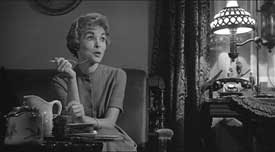
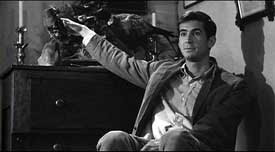
The Parlour Set
The room is depicted a tiny, only sufficient to fit in a lamp, a coffee table, two chairs, a chest, curtains, pictures, candles, several other small items and a lamp. The lamp is located toward the left of Marion, and it the only light portrayed in the scene. As the light was the only source it produced certain effects on each character, which demonstrate the certain aspects of their constructs.
As Marion is sat close to the lamp, her face appears perfectly lit and it highlights her beautiful features and produces an angelic, glimmering effect. However, the light makes her stand out, making her somewhat vulnerable, almost like a “rabbit in the headlights”. However, the light could indicate that Marion’s bad deed of embezzlement is not an act of evil, as she is not hidden by the shadows which demonstrations of the connotations of her innocent character. Moreover the soft effect the high key lighting makes her appear soft and delicate, furthermore making her stand out from the dull and grim background of the motel. No shadows of Marion are indicated, telling the audience she is pure and genuine.
However the composition of Norman is extremely clever. Norman is placed away from the source of light and slightly to the edge. This effect produces stark contrast, producing a shadow of Norman as well as additionally hiding half of Norman in darkness, demonstrating the psychological state of the character with the schizophrenia aspect of his character. Additionally the low key lighting portrays the consumption of his character by evil, the stark contrasts in shadow demonstrate how an element of his persona is hidden while the shadows which threateningly fill the room portray the hidden side of Normans mind which wish to emerge, how they are omnipresent in Norman, waiting to strike.
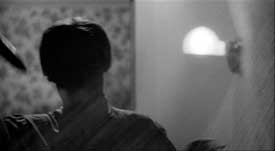
In the shower Scene, the killer is completely consumed by shadow, firstly to hide the identity of the killer and the figures outline trick the audience into believing the mother is the killer. Additionally the shadow indicates how the mother side of Norman’s persona has completely consumed Norman, allowing him to commit the gruesome murders.
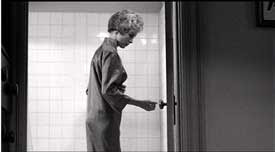
In this shot, Marion is portrayed walking into the high key lighting. She appears vulnerable in her near nudity and the high key lighting is symbolic of Marion taking the steps to heaven, indicating he immediate death and portraying her innocence, despite her crimes.
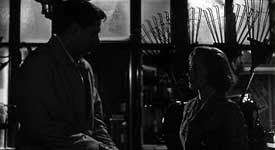
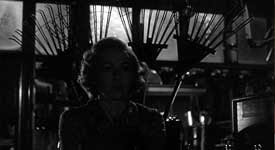
The Shots above are very interesting. Shot is composed of the female and male subjects, several small bright windows which create the shadow effects, as well as the eerie and dominant three rakes. The three rakes, although connotations of their domestic usage also have connotations of weapons and a knife. The fatal use of this domestic item parallels the use of a kitchen knife in Marion’s murder, making the props significant.
The female subject is eclipsed in shadow, portraying the dangerous investigation she is producing while the rakes behind her exemplify the immediate death which she is finding, the height of rakes make the female subject appear more vulnerable.
The Mise-en-scene is a French term which means “put in the scene” or “aspects of the scene”. In Film, its meaning is vast including composition and framing, sets, props, acting and lighting. In cinema, anything which is incorporated into the shot and the arrangement of it has been produced for a reason, to create representations and to allow the audience to generate ideas on the action on screen automatically, without being introduced to the narrative.
In our film, Mise-en-scene will be crucial in order to create an atmosphere as well as produce particular representations of subjects.
Mise-en-scene in cinema comprises of these ingredients;
Production purposes: Sets, costumes and Props.
The use of colour: Tones, strength and both in production and post-production.
The use of Lighting
The performance of the Actors: facial expression, use of props and body language.
Mise-en-scene and the viewer:
As the audience, a movie relies on the mise-en-scene to produce special effects, no other aspect of film production can create. Films which incorporate mise-en-scene well allow the view to stop and analyse the composition and framing of the scene, and what it tells us as a viewer. The narrative can be articulated by the mise-en-scene, as movements of actors or composition of sets can alter the power relationships and atmosphere of scene instantly.
Mise-En-Scene in Psycho
As part of my research, I studied the film “Psycho”, by Alfred Hitchcock. The film is a perfect example of the incorporation of all elements of cinema, especially mise-en-scene. I decided to study Hitchcock use of mise-en scene to indentify prefect examples of its use, which I could integrate into the film opening.
Lighting and Sets
Lighting is a crucial aspect of Psycho, especially during the scene in the parlour.


The Parlour Set
The room is depicted a tiny, only sufficient to fit in a lamp, a coffee table, two chairs, a chest, curtains, pictures, candles, several other small items and a lamp. The lamp is located toward the left of Marion, and it the only light portrayed in the scene. As the light was the only source it produced certain effects on each character, which demonstrate the certain aspects of their constructs.
As Marion is sat close to the lamp, her face appears perfectly lit and it highlights her beautiful features and produces an angelic, glimmering effect. However, the light makes her stand out, making her somewhat vulnerable, almost like a “rabbit in the headlights”. However, the light could indicate that Marion’s bad deed of embezzlement is not an act of evil, as she is not hidden by the shadows which demonstrations of the connotations of her innocent character. Moreover the soft effect the high key lighting makes her appear soft and delicate, furthermore making her stand out from the dull and grim background of the motel. No shadows of Marion are indicated, telling the audience she is pure and genuine.
However the composition of Norman is extremely clever. Norman is placed away from the source of light and slightly to the edge. This effect produces stark contrast, producing a shadow of Norman as well as additionally hiding half of Norman in darkness, demonstrating the psychological state of the character with the schizophrenia aspect of his character. Additionally the low key lighting portrays the consumption of his character by evil, the stark contrasts in shadow demonstrate how an element of his persona is hidden while the shadows which threateningly fill the room portray the hidden side of Normans mind which wish to emerge, how they are omnipresent in Norman, waiting to strike.

In the shower Scene, the killer is completely consumed by shadow, firstly to hide the identity of the killer and the figures outline trick the audience into believing the mother is the killer. Additionally the shadow indicates how the mother side of Norman’s persona has completely consumed Norman, allowing him to commit the gruesome murders.

In this shot, Marion is portrayed walking into the high key lighting. She appears vulnerable in her near nudity and the high key lighting is symbolic of Marion taking the steps to heaven, indicating he immediate death and portraying her innocence, despite her crimes.


The Shots above are very interesting. Shot is composed of the female and male subjects, several small bright windows which create the shadow effects, as well as the eerie and dominant three rakes. The three rakes, although connotations of their domestic usage also have connotations of weapons and a knife. The fatal use of this domestic item parallels the use of a kitchen knife in Marion’s murder, making the props significant.
The female subject is eclipsed in shadow, portraying the dangerous investigation she is producing while the rakes behind her exemplify the immediate death which she is finding, the height of rakes make the female subject appear more vulnerable.
Pyscho- Editing and Camera
As Part of my research, I studied the infamous shower scene from “Psycho”, which is one of the most prestigious examples of editing and camera use in the history of film.
The Shower scene- Horror Editing and Camera
The shower scene is the most influential scene in the history of cinema, it was the films crucial scene and illustrated protagonist Janet Leigh die in a gruesome knife attack. The scene incorporates over 77 separate camera angles, while containing 50 cuts. Despite this variety and fast cutting rate, the scene only lasted three minutes. A majority of the shots are extreme close-ups, depicting the horrendous aspects of the scene as well censoring a majority of the nudity. However, medium shots are incorporated precisely prior to and subsequent to the killing. This amalgamation of close ups paired with the small period of time between cuts make the scene materialize as lengthy, increasingly personal, and horrendously aggressive as if a violent frenzy, this effect wouldn’t have been produced if the clips had been demonstrated unaccompanied or at a wider angle.
Moreover, various interesting technical features were implemented in order to construct certain effects. For instance, in order to secure a straight-on shot of the head of the shower, the camera required a long lens. The central outlets of the shower head were obstructed and with the camera located much further back, making the appearance of the water hitting the lens however did not appear to be running off.
There are various rumours, that although the shower scene is graphic in its construction, the knife never enters the flesh of the subject. Although, detailed frame analysis demonstrates that the subject is penetrated by the knife, although a prosthetic prop is incorporated in the shot. This is interesting concept, the knife entering is recognized as subliminal and the quick pace of the shots actually makes the audience believe that wounds have been inflicted, something which could possible integrated into our film.
The entire shower scene through stills can be seen here;http://faculty.cua.edu/johnsong/hitchcock/pages/stills/shower-1.html
The Shower scene- Horror Editing and Camera
The shower scene is the most influential scene in the history of cinema, it was the films crucial scene and illustrated protagonist Janet Leigh die in a gruesome knife attack. The scene incorporates over 77 separate camera angles, while containing 50 cuts. Despite this variety and fast cutting rate, the scene only lasted three minutes. A majority of the shots are extreme close-ups, depicting the horrendous aspects of the scene as well censoring a majority of the nudity. However, medium shots are incorporated precisely prior to and subsequent to the killing. This amalgamation of close ups paired with the small period of time between cuts make the scene materialize as lengthy, increasingly personal, and horrendously aggressive as if a violent frenzy, this effect wouldn’t have been produced if the clips had been demonstrated unaccompanied or at a wider angle.
Moreover, various interesting technical features were implemented in order to construct certain effects. For instance, in order to secure a straight-on shot of the head of the shower, the camera required a long lens. The central outlets of the shower head were obstructed and with the camera located much further back, making the appearance of the water hitting the lens however did not appear to be running off.
There are various rumours, that although the shower scene is graphic in its construction, the knife never enters the flesh of the subject. Although, detailed frame analysis demonstrates that the subject is penetrated by the knife, although a prosthetic prop is incorporated in the shot. This is interesting concept, the knife entering is recognized as subliminal and the quick pace of the shots actually makes the audience believe that wounds have been inflicted, something which could possible integrated into our film.
The entire shower scene through stills can be seen here;http://faculty.cua.edu/johnsong/hitchcock/pages/stills/shower-1.html
Saturday, 13 February 2010
"The Blair Witch Project"-Analysis

Today, we watched the Blair Witch Project. As we are planning to produce a horror style fiction film opening, I found it very interesting and I have produced an analysis of the films, production, distribution and exhibition.
The Blair Witch Project
The Blair Witch Project is an American horror genre movie which was released in 1999. The plot is portrayed as a documentary put collectively from amateur recording, filmed in an actual period of time. The motion picture depicts the narrative of three teenage student amateur film producers who climb into the eerie Black Hills of Burkittsville, Maryland to produce a documentary concerning a local myth recognized as the Blair Witch, and consequently go missing. The spectator is told that the three were never recovered, even though their video recorder and noise gear (alongside with the majority of the recording they shot) was exposed a year afterwards. This "recovered footage" is offered as the movie the watcher is examining.
The marketing material and Web site for The Blair Witch Project implied that the film consists of actual documentary footage shot by three missing student filmmakers in the woods. I could possibly integrate this technique into my movie, as it would be something simple to re-create.
The reality was that “The Blair Witch Project” is no documented drama. It is an inexpensive, 87-minute, self-regulating feature film made by Haxon Films. The project's unique method of production and postproduction-meant to resemble unrehearsed, documentary footage-may seem more unusual than any supernatural phenomenon, real or imagined. The inexpensive nature means that amateur film producers such as us could re-create this genuine and amateur, yet professional style of the film. Moreover the small cast would be something which would be easiest for us; the handheld camera is perfect as we have these cameras at our disposal.
Daniel Myrick and Eduardo Sanchez directed, co-wrote, and edited the movie, which took an altered route than what they had initially designed. As we would be working in a group of two, this film is perfect example of small scale direction, pre-production and post-production, however we would probably have the same changes and alterations to our original plan, which something we must consider. Daniel Myrick said "We had this premise of shooting it like a documentary for years,"- "As it grew; we embellished it and came up with this legend of the Blair Witch-a whole back-story about a ghost haunting these woods. Besides the 'found' footage, we also shot footage with experts and family members to craft it as a more conventional documentary. The footage we got in the woods, however, was so strong that it told a narrative story by itself. Therefore, we dumped our plan to put other elements into it and ended up using much of that extra footage on the Web site and in other materials we are creating [including a comic book series and a book]. The film uses only the footage shot by the cast." The fact that the footage shot was by the cast members is something we must consider too, as our group size doesn’t allow us to only have directors and editors, we must also star in the film. Additionally, I think the point about removing unnecessary content is crucial because it is only a film opening, and it must state a clear narrative and fast pace (due to the action scenes in horror).
In order to attain their original aims, the producers engaged what they entitled "method filmmaking." Members of the cast captured all the footage over a period of days. Additionally, rather than meticulous scripting, the stars were all provided with outlines, and encouraged to improvise with lines through their character. Moreover, this is something we should consider, detailed scripts are burdening and waste valuable planning time, and we could possibly integrate improvisation and vague scripts in order to receive more genuine, spontaneous and natural acting.
The film incorporates no visual effects to signify the paranormal component of the film, yet incorporates mental stimuli and props, allowing the actors to be the only source of fear for the audience. Myrick and Sanchez confess that the single motive for this was their tremendously small finances. "This was definitely a credit card film, about as much as a decent new car," concedes Sanchez. But motives for preceding effects were for creative purposes-The Blair Witch Project is a response film primarily. The lack of visual effects is something we could utilize in our film opening, although we have the editing facilities to incorporate visual and filmic effects. Personally, as someone who would like to edit the film I feel that our movie would require visuals in order to communicate the opening narrative.
Moreover, the film incorporated low production values which decreased the film creative requirements. The film appeared to be in harsh conditions; furthermore the amateur feel was created by the low production value.
However, I do feel that the low production values did have an effect on the overall quality. Numerous scenes were in terrible lighting and appeared grainy; moreover several scenes are very shaky and make it hard to follow. In our film opening, I believe our production values would have to be much higher in order to produce a quality and understandable film opening. The poor lighting did however create eerie effects in the darkness and produced a more genuine feel to the film, although I feel it did distort the quality at parts.
From my additional research I found the film's cutting and postproduction procedure was very conventional, although it was still strange for an inexpensive, indie movie. Firstly, Myrick and Sanchez had to select throughout 19 hours of movie (which had taken 8 days to film) and video recording to produce the 87 minutes depicted in the motion picture. The editing processes was very long; it took roughly eight months to edit the whole thing. This is something we must contemplate, the editing process could be the hardest part and we must reserve time for editing our recorded footage.
However, the movie's auditory mix was the individual region where distinctive, Hollywood production values were put into the development. The mix was produced by Dana Meekss. Meeks delicately removed and improved a great deal of the audio recorded by the camcorder and DAT machine. Audio editing is something we must integrate too, as well as enhancing and cleaning certain components of the captured audio I felt non-diegetic music and sounds should be integrated into our production.
Budget
The budget for the film was unusually low, around $20-$25 thousand before certain aspects of exhibition and distribution. The small budget here is encouraging as our film would be low budget and we have our own amateur editing facilities which will ultimately reduce costs.
Reaction
Despite its small budge “The Blair Witch Project” grossed $248,639,099 globally. Which is a huge contrast between its final and initial budgets.
Subscribe to:
Posts (Atom)
